Interview with Martin Krasemann: From Solo Fighter to a Major Haywire Modiphius Release
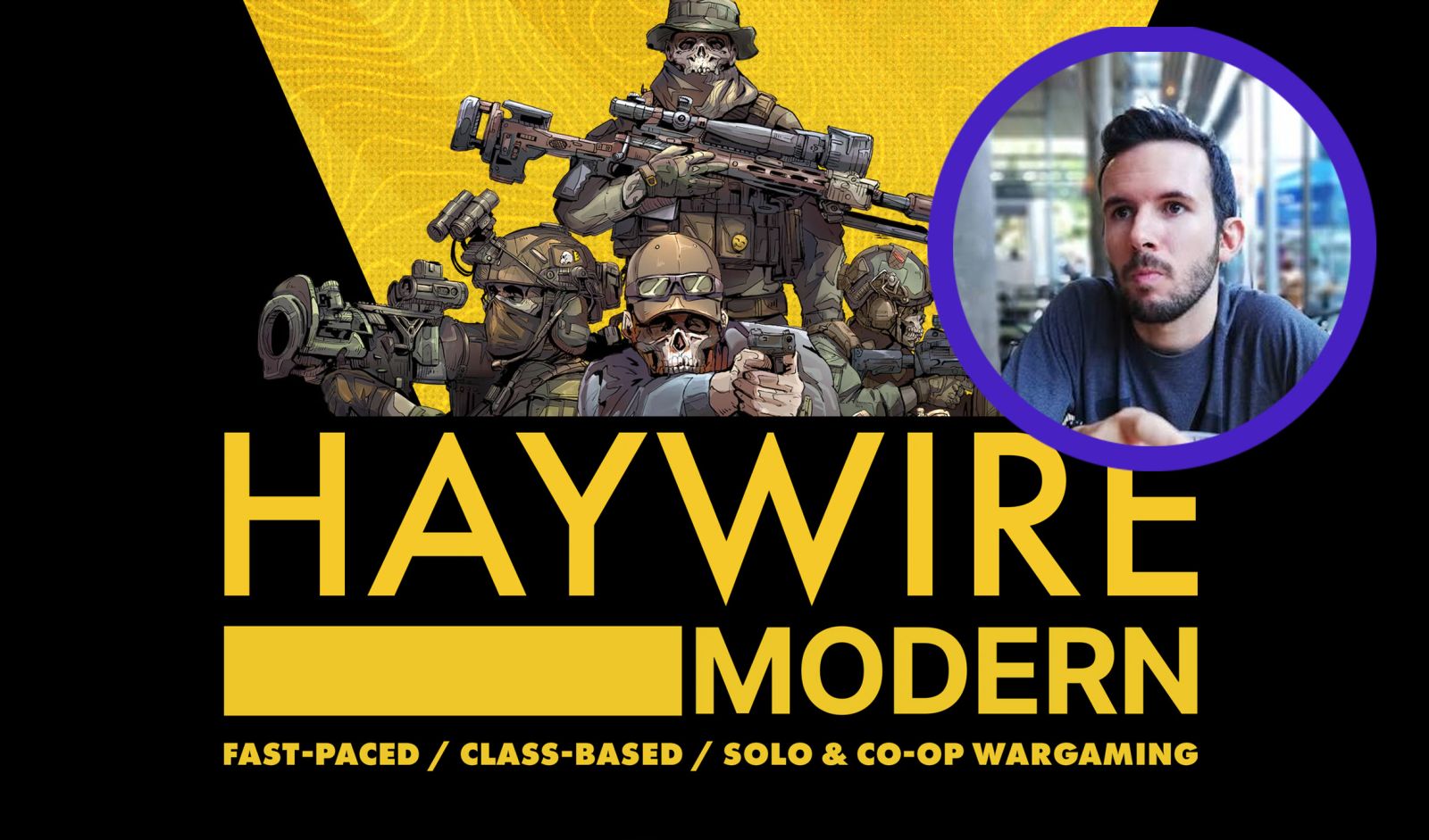
Looking for a tabletop equivalent of Navy SEALs and Rainbow Six, I stumbled across the YouTube videos of a charming Frenchman: Martin Krasemann, creator of HAYWIRE, was working on a modern warfare system exactly like the one I had in mind.
With simple means and a lot of pragmatism, he brought drug cartel neighbourhoods and warlord fortresses to life – and in doing so created an asymmetric, AI-driven solo system that has found a loyal following. Now Modiphius Entertainment has discovered his system and is releasing HAYWIRE Modern as a professional published edition.
I had the opportunity to ask Martin a few questions.
Friday Knight: Hi Martin, congratulations on your Modiphius deal. How did the collaboration with Modiphius come about? Did you approach the publisher, or did they reach out to you?
Martin: Modiphius reached out. They seem to be very interested in solo games, and when they heard about my game, they contacted me through my Facebook page.
-
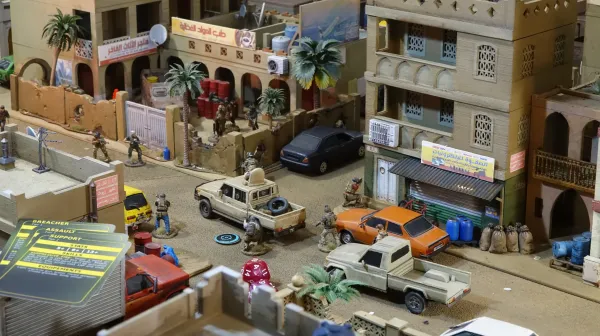
Haywire Modern: Tabletop boards straight out of an action movie
Friday Knight: How long did it take from first contact to publication? Did you meet in person, or was it all handled remotely?
Martin: We never met physically – everything was handled through chat or webcam calls. It took probably more than a year, though I don't remember exactly.
But most of that time was spent by me working on the new edition: improving the rules, rewriting a lot of things. I didn't want to just release the existing edition as it was.
Friday Knight: Did Modiphius change or adapt your rules system? What was the collaboration like in that regard?
Martin: The only tweak requested was to change one of the insurgent classes which was carrying a suicide vest. It ended up as a new class called the Drone Handler, which is even more dangerous in the end!
Friday Knight: There's a lot of discussion on your Discord channel, especially about the realism of certain units and equipment. Can a game even be realistic in the first place? Where does your focus lie here? Is there maybe a specific anecdote where a veteran corrected something that surprised you?
Martin: Honestly, I don't focus that much on realism and rely more on what I find to be fun game mechanics. One of my starting points when creating HAYWIRE was the Battlefield game series, with its four classes. Each of those classes can be kitted out in what could essentially be sub-classes – like the support soldier who carries an LMG (Light Machine Gun) but can also act as a medic.
The first edition of HAYWIRE had only six playable classes. It worked well, but I wanted players to have more tactical options. Another source of inspiration was the video game Door Kickers 2 – also a class system with many items to unlock, but more realistic than Battlefield.
Aside from that, I love all kinds of good military and modern war movies, and I wanted to capture that Hollywood action style. Suppressors, for example, work much more like they do in movies than in real life, where they still make a lot of noise. I had many discussions with veterans when working on this new edition, mainly while reworking all the classes. That's where I came up with some of the new classes and skills, especially in the Tier 2 category – the machine gunner and assistant machine gunner acting as a tandem, which is a pillar of some military doctrines.
-
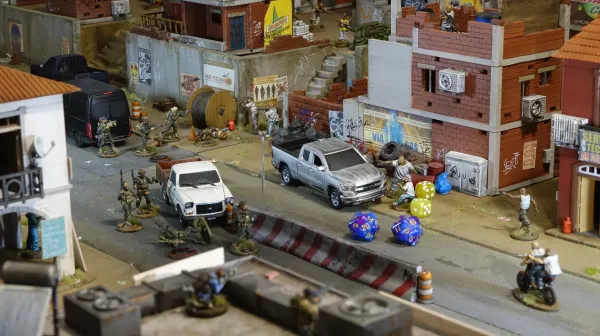
Unplanned escalation in cartel territory!
Friday Knight: How did it all start? Why did Martin Krasemann come up with the idea for a modern warfare tabletop game? Did the systems that already existed not satisfy you? And when did the idea come up to document the process? Was a publisher deal always the goal?
Martin: I started modern wargaming about ten years ago and played mainly Spectre: Operations. It was the most popular and most active game at the time and came with a great range of miniatures. One of the problems was that the solo system felt very much like an afterthought. I play almost exclusively solo – I don't have a group of friends around me who are interested in wargaming. That's where I started writing my own rules on top of Spectre: Operations.
About three years ago, Spectre Miniatures stopped developing the existing ruleset and began working on a new one. At that point I asked myself: do I want to keep creating a mod on top of an existing game, or should I create my own ruleset? I already had experience creating three solo supplements for Spectre: Operations, which worked really well, so it felt like the right time to take those mechanics and turn them into a full game.
At the same time, my first child was born – and during the night feeding sessions, that's where the first edition of HAYWIRE came to life. I was writing notes and ideas on my phone, then playtesting them the next day.
One thing I always wanted was to release everything for free for the community. That was the case with all the Spectre supplements, and with the first two editions of HAYWIRE. My goal was simply to create something cool that I enjoyed, and if other people could enjoy it too – why not!
A real publisher was never on my radar until Modiphius contacted me. I released the second edition only on DriveThruRPG, but it already attracted a lot of players. I'm really happy with the direction things are taking now, and most importantly – it's really exciting to finally have a physical release!
Friday Knight: Now that you're officially allowed to call yourself a game designer, I'm sure you've already quit your job and ordered a Ferrari. Just joking. But how do things move forward? Will your main focus stay on HAYWIRE, or do you already have other projects in mind?
Martin: (Laughs) I already have many more HAYWIRE games planned. Not sure if you're familiar with it, but I already did a standalone expansion called HAYWIRE: Outbreak – a zombie extraction game inspired by the Left 4 Dead video game series. HAYWIRE: Outbreak currently uses some art I don't own, which is why it's only discoverable through my YouTube video descriptions. That said, it's my next step: rework HAYWIRE: Outbreak, make sure I own all rights to the content, and add all the cool new stuff I had in mind while playing the Outbreak campaign on my YouTube channel.
The second expansion will return to the modern setting with a bank robber expansion, putting players in the shoes of gangsters. Think the movie Heat or the Payday game series. I have some pretty cool ideas for special classes that will fit nicely with that theme – and it's a good way to switch sides and force players to play the bad guys for once.
-
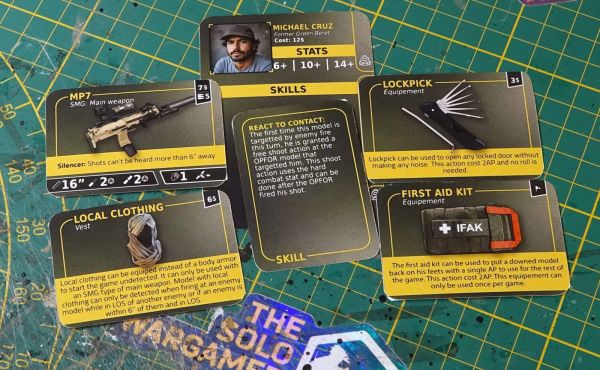
Sneak Peek: New cards for the PMC expansion
After that I have other plans, though in no specific order yet: a WW2 commando behind-enemy-lines supplement, a Stalker/SCP*/Stranger Things-style universe with a kill team sent to contain breaches, a near-future setting like Call of Duty: Advanced Warfare with jetpacks and mechs, and a PMC (Private Military Company) expansion with heavy gear management.
* SCP (Secure, Contain, Protect) is a free, open-source collaborative fiction project built around a secret organization that captures and studies paranormal phenomena – somewhere between The X-Files and the video game Control. Because the entire universe is open source, it can be used for games and other content without licensing issues. More at scp-wiki.wikidot.com
Friday Knight: I've been following you for several years now. If I remember correctly, it wasn't always easy to keep going, since you also have a family and other commitments in life. What tip would you give to aspiring game designers? What mistakes did you make that they might be able to avoid?
Martin: That's a tough one! My experience will probably be quite different from most people's, because I started by modifying an existing game before creating my own full ruleset. Starting that way allowed me to use a solid foundation and only add what I wanted on top of it. The advantage was also that there was already a large user base for that game – through my free supplements I got a lot of player feedback that helped me fine-tune the rules across several supplements. So even when the first version of HAYWIRE came out, I knew that some of the rules already worked well.
My other tip is that it has to be a passion project. I don't do this for the money – I always wanted to release everything for free. My goal is simply for players to have fun. And because of that passion, I've spent countless hours on many aspects of the game. One of the biggest time sinks has been the cards – across the ten years I've been in modern wargaming, I've probably made more than 2,000 unique cards, and in many cases I've also released the PSD files so people can customise them.
Another tip: don't set deadlines. If you're creating a new game from scratch, let it mature. Release it for free as early as possible so people can playtest it. Share videos showing the game and its mechanics. I'm one of those people who loves watching YouTube vlogs from video game developers like ThinMatrix – seeing a game being built, with the creator sharing ideas and asking for feedback. If I had more time, I would love to do that for the new edition of HAYWIRE on my channel.
Friday Knight: Martin, thank you so much for the interview and best of luck with you and your projects!
The 224-page HAYWIRE Modern hardcover is releasing in September 2026. A free 20-page quickstart PDF is already available.
»» Pre-order Haywire here: HAYWIRE Modern bei Modiphius
»» Here is the free HAYWIRE-Quickstart-PDF
»» Here is the HAYWIRE-Youtube-Channel
-
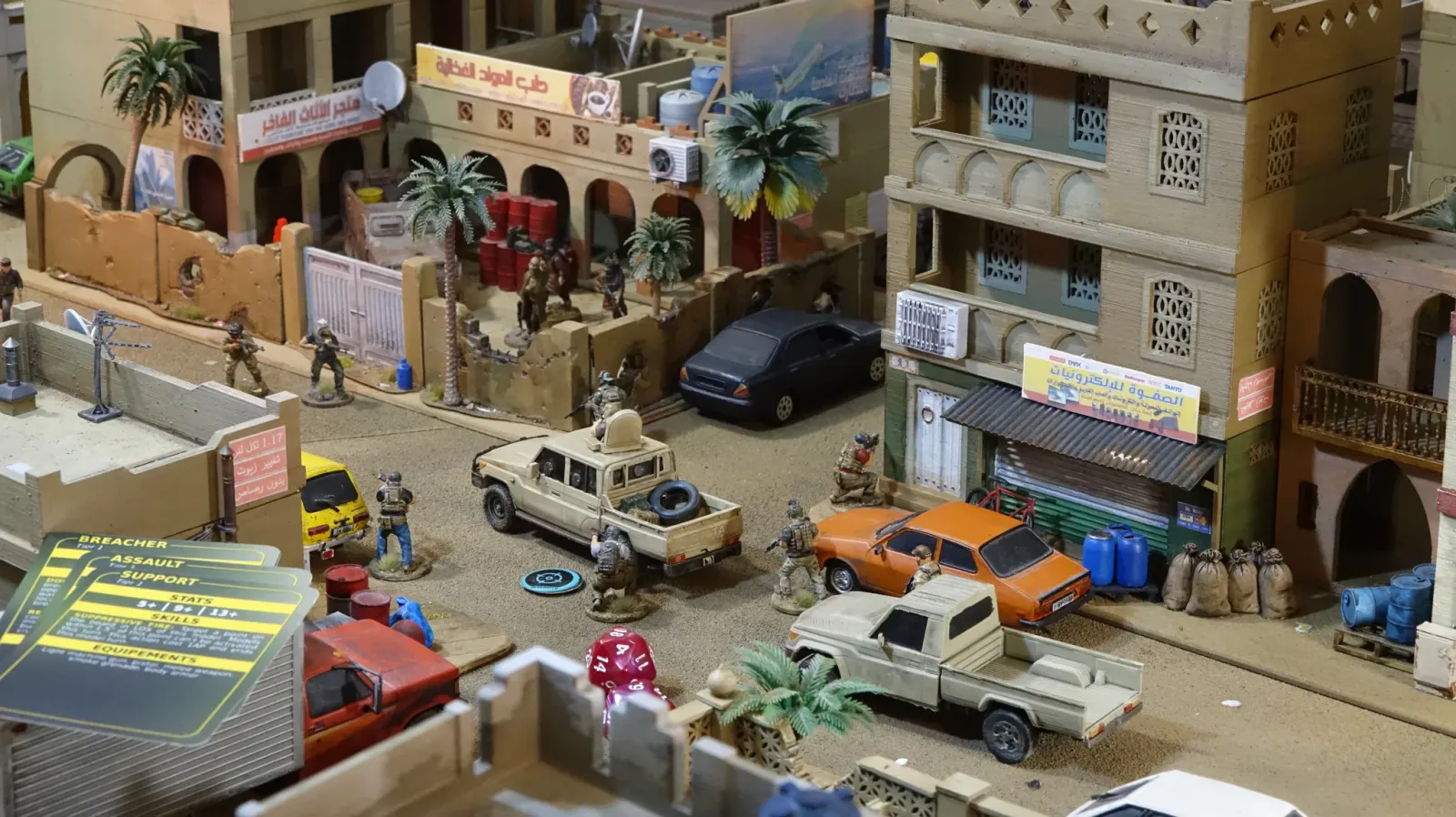
Bild 1/7: Haywire Modern: Tabletop boards straight out of an action movie -
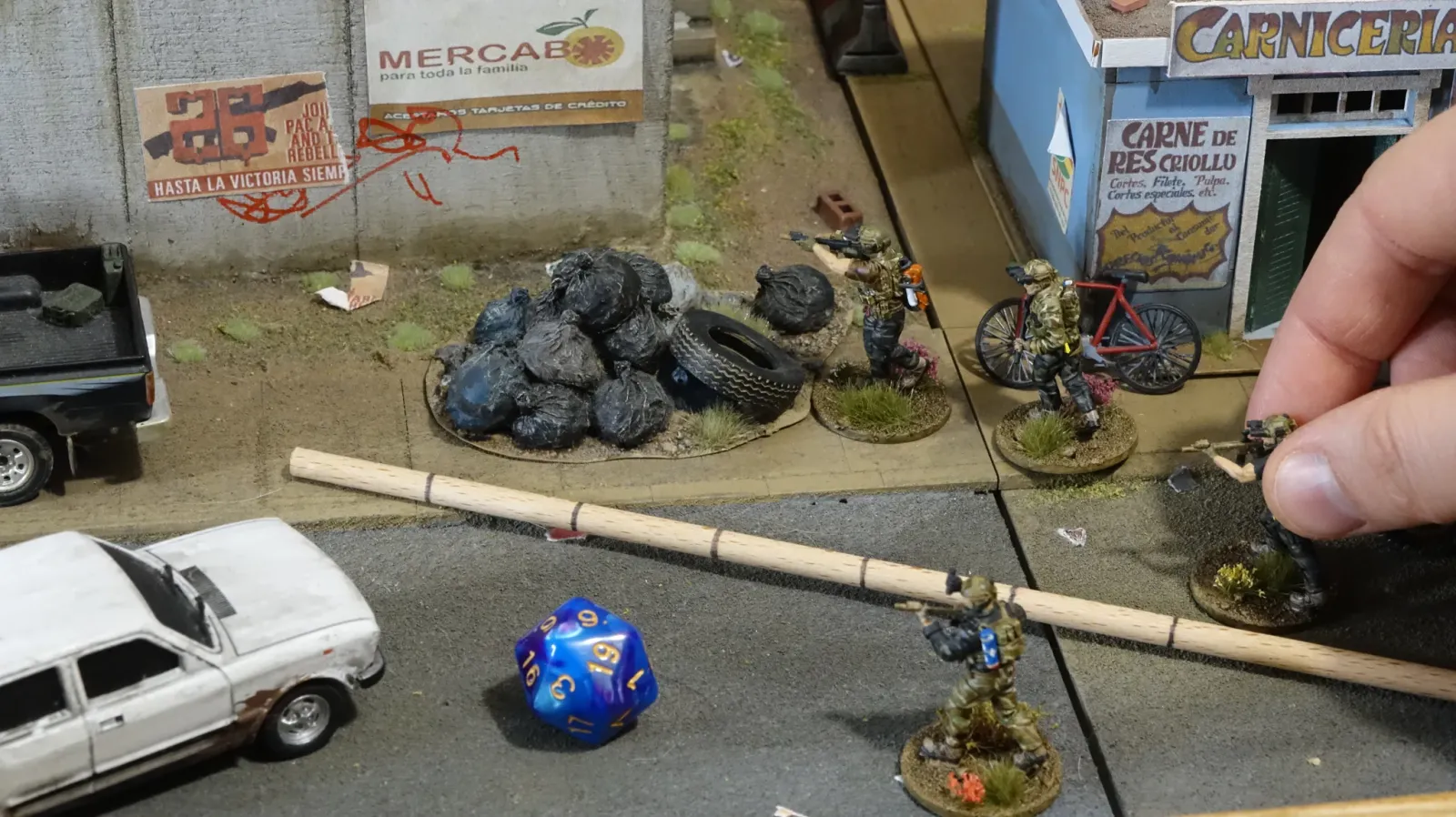
Bild 2/7: Engage! Engage! -
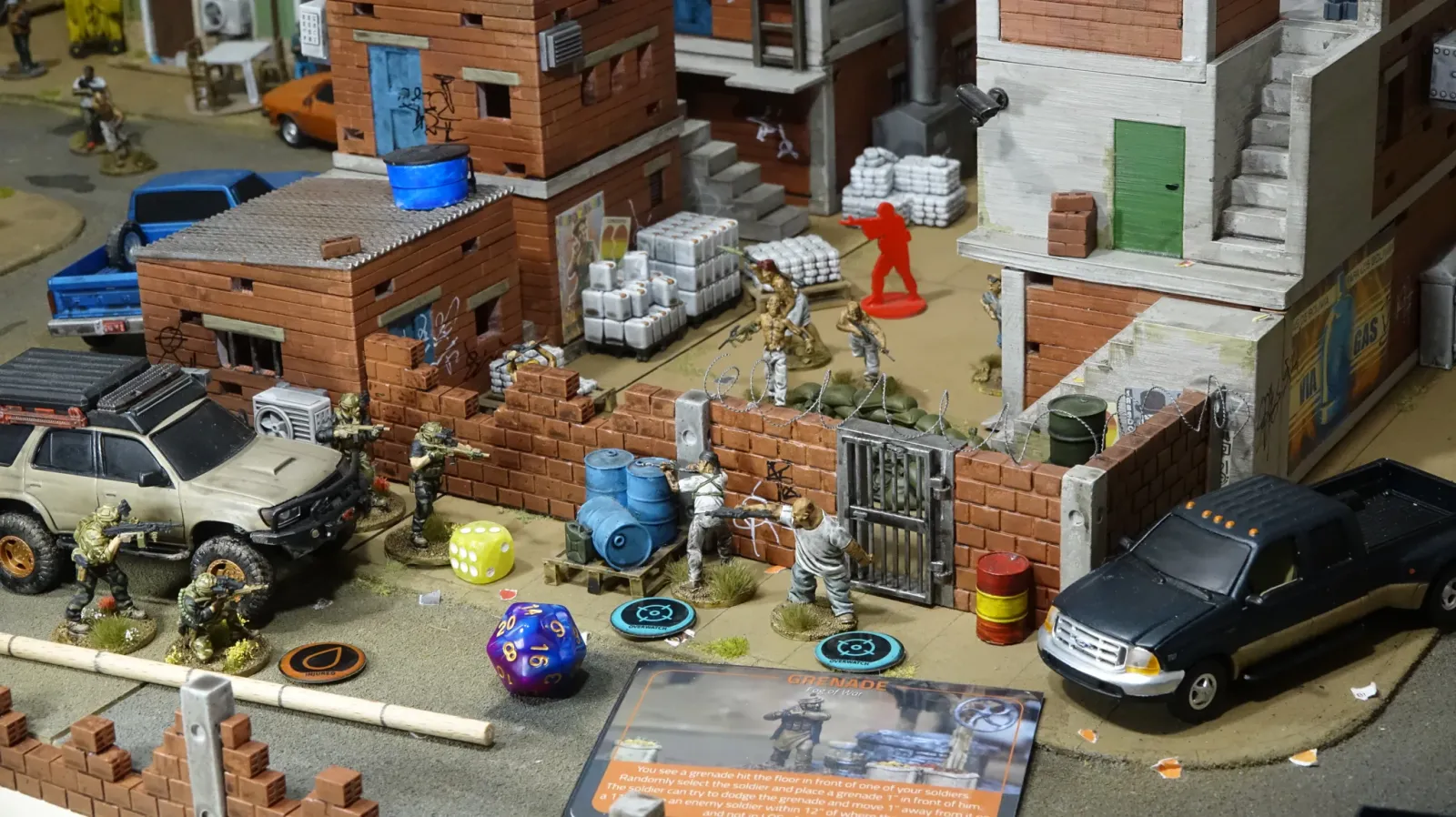
Bild 3/7: A sophisticated game AI ensures: -
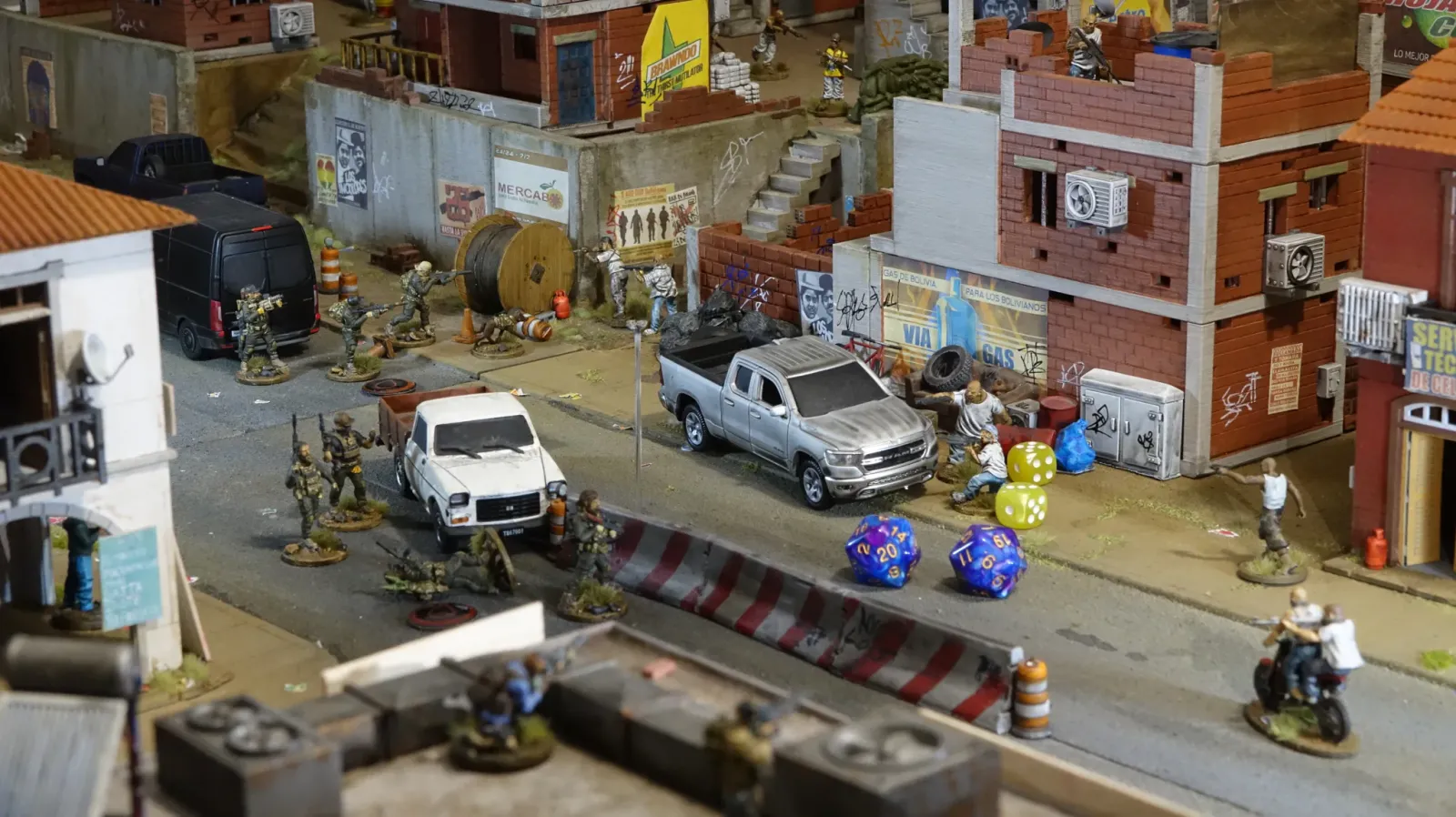
Bild 4/7: Unplanned escalation in cartel territory! -
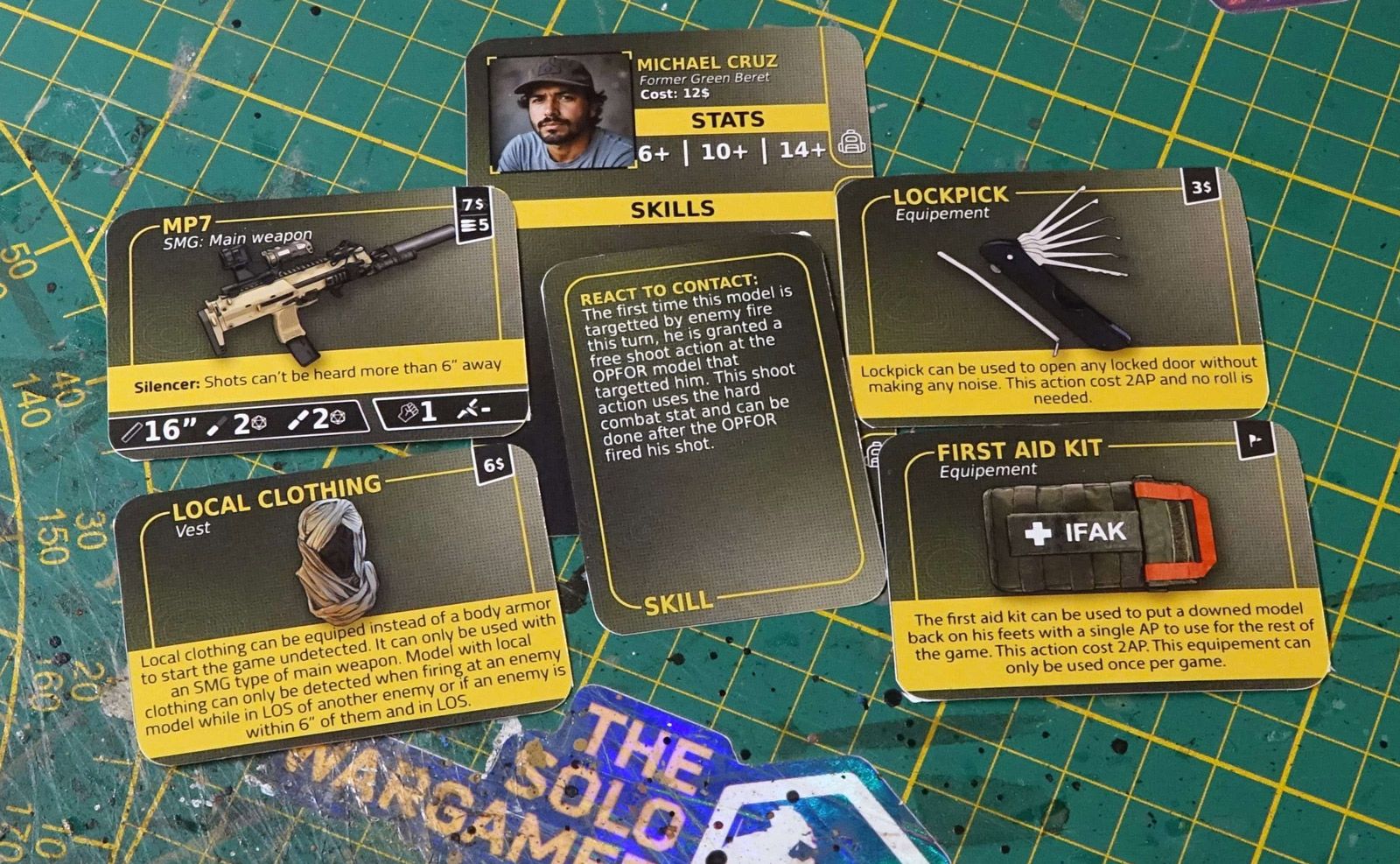
Bild 5/7: Sneak Peek: New cards for the PMC expansion -
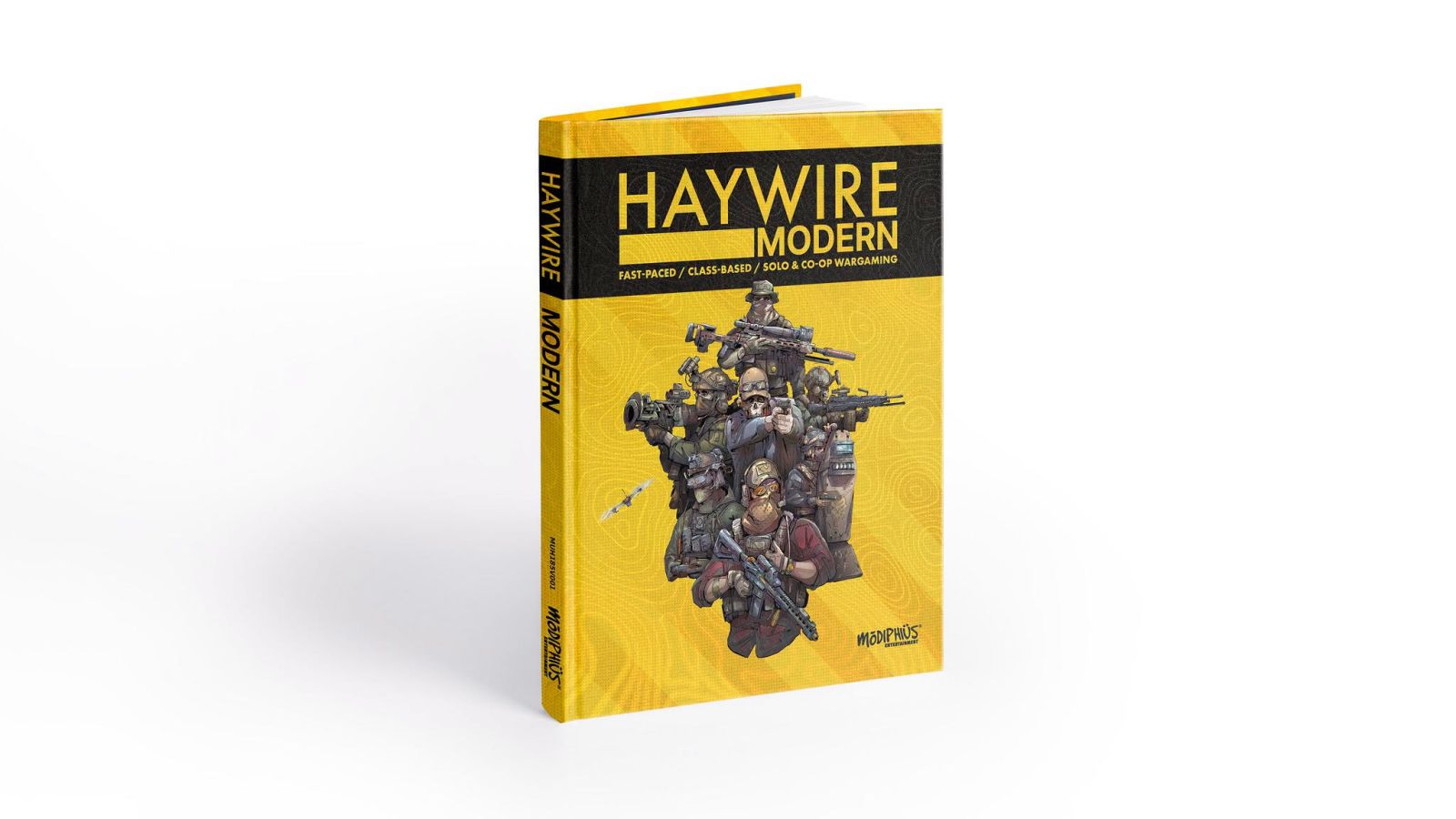
Bild 6/7: The new physical book … -
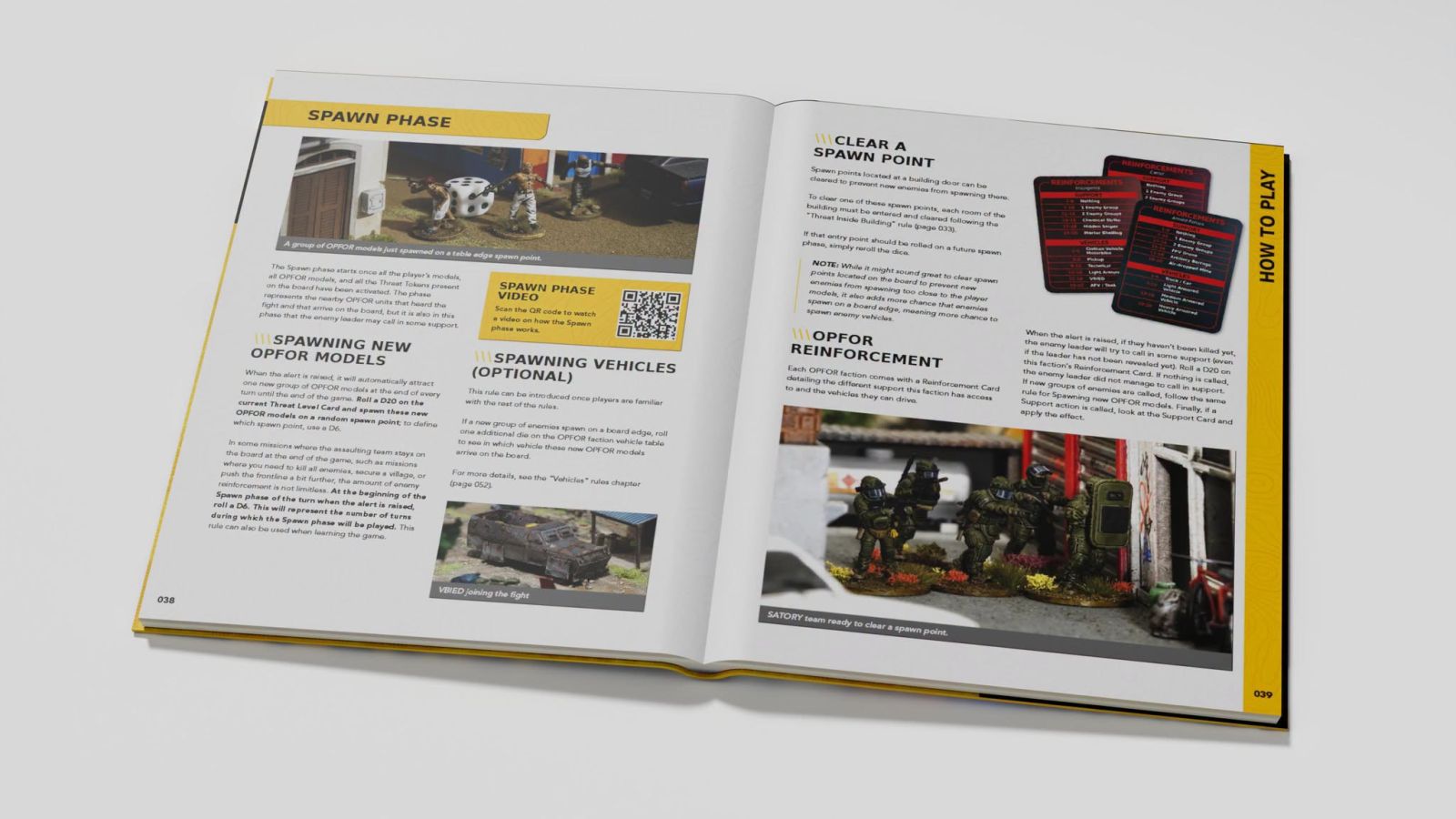
Bild 7/7: … out now at Modiphius!